
Perceiving Your Aura Meditation
Develop your intuitive awareness through this gentle aura meditation designed to help you sense and explore your own energetic field. Using visualization, mindfulness, and subtle perception practices, you'll become more attuned to the space within and around your body. Whether you're new to energy work or have an established spiritual practice, this meditation offers a curious and grounded approach to exploring your aura. Come away feeling more connected, present, and aware of your energetic experience. This meditation is one of many you’ll find in my published Reiki Manual to learn Level 1 and 2 Reiki through the lens of science and surrender. This meditation is 11 minutes long, and was written and narrated by Eden Sipperly, Reiki Master Teacher and Licensed Clinical Mental Health Counselor Associate.

Moving Between Presence & Witness: Exploring Your Humanity
This guided meditation explores the balance between fully experiencing your emotions and observing them with gentle awareness. By moving between presence and witness, you'll strengthen your capacity to stay grounded without becoming overwhelmed by your inner world. This mindfulness practice encourages emotional resilience, self-awareness, and greater nervous system flexibility. It's an invitation to honor your humanity while discovering the steady awareness beneath it. This meditation is 14 minutes long, and was written and narrated by Eden Sipperly, Reiki Master Teacher and Licensed Clinical Mental Health Counselor Associate.

Bringing Grace In: A Practice of Embodying Self-Compassion Meditation
Cultivate a kinder relationship with yourself through this guided self-compassion meditation. Together we'll explore what it feels like to meet your inner experience with warmth, curiosity, and grace rather than judgment. This practice is especially supportive during seasons of stress, healing, perfectionism, or self-doubt. Leave feeling more grounded in your humanity and connected to the compassion that already exists within you. This meditation is one of many you’ll find in my published Reiki Manual to learn Level 1 and 2 Reiki through the lens of science and surrender. This meditation is 13 minutes long, and was written and narrated by Eden Sipperly, Reiki Master Teacher and Licensed Clinical Mental Health Counselor Associate.

Yoga Nidra for Release Meditation
Allow your body and nervous system to deeply unwind through this restorative Yoga Nidra meditation for release. As you rest in a state between wakefulness and sleep, you'll be gently guided to soften physical tension, emotional holding, and mental clutter. This practice supports deep relaxation while inviting your body to let go of what it no longer needs. Perfect for stress relief, nervous system regulation, or preparing for restful sleep. This meditation is 28 minutes long, and was written and narrated by Eden Sipperly, Reiki Master Teacher and Licensed Clinical Mental Health Counselor Associate.

Clearing Out Old Energy Meditation
This guided meditation is designed to help you release stagnant energy, emotional heaviness, and the stress you've been carrying. Through gentle visualization and mindful awareness, you'll create space for clarity, lightness, and renewed presence. Whether you're feeling overwhelmed, emotionally drained, or simply ready for a fresh start, this practice offers a grounding reset. Return feeling more centered, refreshed, and connected to yourself. This meditation is 14 minutes long, and was written and narrated by Eden Sipperly, Reiki Master Teacher and Licensed Clinical Mental Health Counselor Associate.

How EMDR's Recent Incident Protocol Can Help You Process Trauma Before It Gets Stuck
When Something Happens: How EMDR's Recent Incident Protocol Can Help You Process Trauma Before It Gets Stuck

Reconnecting with Ritual: Simple Practices for Big Impacts Meditation
This meditation is a gateway into remembrance. Ritual connects our daily living to our larger values, embodiment, spirituality, and purpose. The primary purpose of a ritual is to help the human brain navigate uncertainty. By relying on structured, repetitive actions, rituals reduce stress, regulate emotions, and provide a sense of predictability and agency when facing life's complexities. Utilize this meditation when you are seeking to reconnect with a more calm version of yourself that trusts deeply. This meditation is 14 minutes long, and was written and narrated by Eden Sipperly, Reiki Master Teacher and Licensed Clinical Mental Health Counselor Associate.

This is Enough: Finding Contentment in the Present Meditation
Utilize this meditation when you wake to welcome in the day and the power of the present moment: where your power lives! This is also a common nightly meditation to find peace in the day that has come and gone, knowing you have done enough. Whatever moment you’re seeking peace in, may it arrive and be held with softness. This meditation is 15 minutes long, and was written and narrated by Eden Sipperly, Reiki Master Teacher and Licensed Clinical Mental Health Counselor Associate.

Clarifying the Self: This New Day Morning Meditation
Utilize this short morning meditation to realign yourself towards the version of you that you desire to embody today. You can use this meditation to focus your day, your values system, and your own innate capacity to be the version of you that you are becoming. Return to this meditation time and time again. This meditation is 11 minutes long, and was written and narrated by Eden Sipperly, Reiki Master Teacher and Licensed Clinical Mental Health Counselor Associate.

You Are Creative: Planting Seeds of Success and Support
This meditation enlivens your creative fire through planting seeds of visualization and clarity in your mind and body. Allow yourself to cultivate that creative force within you through recognition that every act and moment is inherently creative. This meditation is 19 minutes long, and was written and narrated by Eden Sipperly, Reiki Master Teacher and Licensed Clinical Mental Health Counselor Associate.
What Surprised Me Most During My EMDR Training
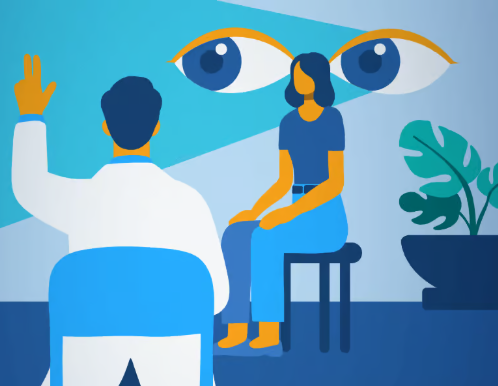
This week, I completed my EMDR training, and I've found myself reflecting on something that happened over and over again throughout the week.
People would finish practicing with one another, look around the room with a mixture of confusion and amazement, and say things like:
"That was so strange."
"It feels like magic."
"I have no idea why that worked, but something shifted."
It became such a common refrain that it almost felt like part of the curriculum.
As therapists, we spend a lot of time trying to understand why something works. EMDR has a growing body of research supporting its effectiveness, particularly for trauma and distressing life experiences, and there are compelling theories about what is happening neurologically during the process. Even so, there is something about experiencing it firsthand that is difficult to fully explain until you've been in the client's chair yourself.
The week reminded me that healing can sometimes happen in ways that surprise us.
The insights often arrive on their own
One of the biggest surprises for many people in the training was how little effort was required to "figure things out."
Before experiencing EMDR, it's easy to imagine that therapy has to involve analyzing every detail, searching for the right interpretation, or intellectually solving the problem. During many of the practice sessions, however, insights emerged spontaneously.
People would suddenly remember forgotten experiences. They would recognize connections between seemingly unrelated events. Beliefs they had carried for years would begin to soften without anyone convincing them otherwise.
It wasn't that someone handed them an answer.
Their own minds arrived there.
Watching this happen repeatedly across the room was remarkable.
The body seemed to know where to go
Another surprise was how often people's bodies became part of the conversation.
A tight chest would begin to relax.
A clenched jaw would soften.
Someone would suddenly become aware of tension they hadn't noticed before, only to feel it gradually shift as the processing continued.
As therapists, we often talk about the connection between the mind and the body. During the training, that connection became incredibly tangible. It served as another reminder that our experiences aren't stored solely as stories. They also live in sensations, emotions, and patterns of physiological response.
Small memories often opened very big doors
Many of us assumed the most emotionally intense memories would naturally become the focus.
Instead, it was often the moments that initially seemed insignificant that held surprising emotional weight.
A passing comment from childhood.
An experience on the playground.
A teacher's response.
A seemingly ordinary interaction with a parent or sibling.
These moments had quietly shaped beliefs about worth, safety, belonging, or competence. Once they were processed, people frequently noticed shifts that extended far beyond the original memory.
It reinforced something I often tell clients: our nervous systems don't organize experiences according to whether they seem objectively "big" or "small." They organize experiences according to what they meant to us at the time.
The brain genuinely wants to heal
Perhaps the greatest surprise of all was witnessing just how naturally the mind moves toward healing when given the right conditions.
Throughout the week, we weren't forcing insights or directing people toward particular conclusions. The process repeatedly demonstrated that the brain has an incredible capacity to reorganize experiences, integrate memories, and arrive at healthier perspectives.
That doesn't mean every memory becomes easy or every emotion disappears.
It does mean that the brain appears remarkably capable of digesting experiences that once felt stuck.
There was something deeply hopeful about watching that unfold again and again.
Leaving with even more curiosity
I left the training with new clinical tools, certainly, but I also left with a renewed sense of humility.
The human mind is extraordinarily complex. Our nervous systems are constantly adapting, protecting us, and searching for ways to integrate our experiences. Sometimes that process happens through conversation. Sometimes it happens through movement, relationship, or time. And sometimes, through a structured approach like EMDR, people discover shifts they never anticipated.
There is still much to learn about exactly how healing unfolds.
What this week reinforced for me is that healing is often less linear than we expect, more embodied than we realize, and more possible than we sometimes believe.
If you're curious about EMDR or wondering whether it might be a good fit for your own healing journey, I'd be honored to have that conversation with you. Every person's story is different, and one of the things I appreciate most about EMDR is that it honors the wisdom of your own mind and nervous system while creating space for lasting change.

Complete Chakra Balancing Meditation
Utilize this complete chakra balancing meditation to invigorate and align each of your energy centers. Each chakra is focused on individually in this meditation through the associated color, sound, mantra, and location in the body. Fall in love with your energetic system. Notice what is here, and let yourself be. This meditation is one of many you’ll find in my published Reiki Manual to learn Level 1 and 2 Reiki through the lens of science and surrender. This meditation is 17 minutes long, and was written and narrated by Eden Sipperly, Reiki Master Teacher and Licensed Clinical Mental Health Counselor Associate.

Sending Distance Reiki to a Friend
Utilize this simple connective meditation to explore your own innate capacity to send love, care, presence, and power to a friend through the lens of Reiki. While this is formulated for those trained in Reiki, it is still an accessible entry point into energy work for any curious being. This meditation is one of many you’ll find in my published Reiki Manual to learn Level 1 and 2 Reiki through the lens of science and surrender. This meditation is 15 minutes long, and was written and narrated by Eden Sipperly, Reiki Master Teacher and Licensed Clinical Mental Health Counselor Associate.

1 Hour Reiki for Regulation
This hour long track focuses on deep regulation through different breathwork practices, tailored meditations, visualizations, and present moment inquiry. Whether you’re new to energy practices or a veteran explorer, this track is created for you. Through this simple yet potent track you can deepen relationship with yourself and gain deeper familiarity with your own capacity to regulate, in many moments through your life. This meditation is 60 minutes long, and was written, channeled, and presented by Eden Sipperly, Reiki Master Teacher and Licensed Clinical Mental Health Counselor Associate.

Facial Relaxation Meditation
This short meditation links your bodily awareness to your internal ability to find relaxation and spaciousness through the mind. Take time out of your day to relax your body and mind through this simple exercise of presence and awareness. This meditation is 9 minutes long, and was written and narrated by Eden Sipperly, Reiki Master Teacher and Licensed Clinical Mental Health Counselor Associate.

Breath Awareness Exercise
Sometimes the simplest practices are the most transformative. This guided breath awareness meditation invites you to slow down and simply notice the natural rhythm of your breathing without trying to change it. As your attention settles on the breath, your nervous system has an opportunity to relax and reset. A beautiful practice for cultivating mindfulness, focus, and everyday presence. This meditation is 7 minutes long and was written and narrated by Eden Sipperly, Licensed Clinical Mental Health Counselor Associate and Reiki Master Teacher.

Connecting to Universal Life Force Energy Meditation
Deepen your connection to universal life force energy through this calming guided meditation. Whether you practice Reiki or are simply curious about energy work, this session invites you to cultivate presence, openness, and receptivity. As you settle into stillness, you'll explore the energetic connection that exists within and around you. Leave feeling grounded, supported, and more connected to life itself. This meditation is one of many you’ll find in my published Reiki Manual to learn Level 1 and 2 Reiki through the lens of science and surrender. This meditation is 11 minutes long, and was written and narrated by Eden Sipperly, Reiki Master Teacher and Licensed Clinical Mental Health Counselor Associate.

Sensing Morning Meditation: Grounding into Self and Surroundings
This 16 minute meditation is a fan favorite: exploring our deep connection with ourself and our surroundings: the two landscapes of our lives. Start your morning with a short grounding exercise to orient your day in peace, awareness, and steadiness. This meditation was written and narrated by Eden Sipperly, Reiki Master Teacher and Licensed Clinical Mental Health Counseling Associate.

Calming Hypnobirthing Wave Meditation
Hypnobirthing Wave Meditation to support pregnancy, labor, and early motherhood through deepened relaxation, awareness, and softening to the realities at hand. This meditation is 27 minutes long, and was written and narrated by Eden Sipperly, Reiki Master Teacher and Licensed Clinical Mental Health Counselor Associate.

Going Viral: How Social Media Shapes Our Brains, Relationships, and Emotional Lives
Going Viral: How Social Media Shapes Our Brains, Relationships, and Emotional Lives
There has never been another time in human history where ordinary people have had the ability to broadcast themselves to hundreds, thousands, or even millions of others with the click of a button. In many ways, social media has created extraordinary opportunities for connection, creativity, education, and community. At the same time, it has quietly changed the way we experience ourselves, one another, and even what it means to feel successful, accepted, or worthy.
One of the most fascinating aspects of social media is that it has introduced the possibility of "going viral." For most of human history, our reputations existed within relatively small communities. Today, a photo, opinion, dance, business, or vulnerable moment can suddenly be exposed to an audience far beyond what our nervous systems evolved to handle. While this can bring joy and opportunity, it can also create tremendous psychological pressure.
From a neurological perspective, social media platforms are exceptionally good at capturing attention. Every like, comment, message, or notification provides a small burst of novelty and reward. Dopamine, a neurotransmitter involved in motivation and learning, plays a role in this process. Over time, many people begin unconsciously checking their phones not because they are intentionally seeking information, but because their brains have learned to anticipate the possibility of reward.
This anticipation can have consequences. The nervous system thrives on periods of activation followed by periods of rest. Social media, however, can create a state of near-constant stimulation. Many people notice difficulty concentrating, increased anxiety, disrupted sleep, and a persistent feeling that they should be doing more, seeing more, or responding to more than they realistically can.
There are sociological implications as well. Human beings evolved in tribes and communities where social feedback came from dozens of people, not thousands. Our brains still care deeply about belonging and approval because these needs have always been tied to survival. Social media amplifies these ancient drives by placing us in comparison with people we have never met and exposing us to endless metrics of popularity, appearance, achievement, and influence.
Perhaps this is one reason so many people feel strangely lonely despite being more connected than ever before. Relationships can begin to feel performative. Experiences become content. Moments are interrupted by the thought of how they might appear to others. Many people describe feeling as though they are simultaneously living their lives and observing themselves living them.
The phenomenon of going viral adds another layer to this complexity. While fame and recognition have always existed, they were historically limited to a relatively small number of public figures. Today, anyone can unexpectedly find themselves at the center of widespread attention. Some people experience this positively, while others report intense anxiety, criticism, loss of privacy, or a sense of disorientation. Human beings are deeply social creatures, but our emotional systems were designed for villages, not audiences.
Social media has also altered the pace at which we absorb information and emotions. We can encounter heartbreaking news, a friend's vacation photos, political outrage, parenting advice, a comedy sketch, and an advertisement within the span of a few minutes. The nervous system receives all of this input without much opportunity to process or integrate what it has encountered. Over time, emotional exhaustion and numbness can emerge as protective responses.
At the same time, social media is not inherently harmful. Many people find genuine support, meaningful friendships, educational resources, and opportunities that would have been impossible a generation ago. Creativity has flourished. Communities have formed around shared experiences. People who once felt isolated can now find understanding and belonging.
The question, then, becomes less about whether social media is good or bad and more about how we want to relate to it. Bringing awareness to our habits allows us to ask important questions. Am I consuming more than I am creating? Am I comparing myself to curated images of other people's lives? Do I feel nourished or depleted after spending time online? Am I using these tools intentionally, or am I being used by them?
These are deeply human questions, and they often emerge in therapy. Many people come to therapy feeling anxious, disconnected, overwhelmed, or uncertain about who they are apart from the expectations and images they encounter every day. Together, we can begin exploring what it means to reconnect with your own values, your own voice, and your own rhythms in a world that is constantly competing for your attention.
Therapy offers a place to slow down and step outside the endless stream of information and comparison. It creates space to understand your relationship with technology, anxiety, identity, relationships, and the larger questions that shape a meaningful life. In many ways, healing involves returning to something remarkably simple: learning how to hear yourself again amidst all the noise.